
B2B Demand Generation Decision Guide

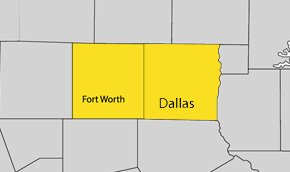
 For executive leadership teams at mid-market B2B companies across the Dallas–Fort Worth metroplex—spanning manufacturing hubs in Garland and Grand Prairie, healthcare technology innovators along the Dallas North Tollway, and corporate staffing firms in Uptown—the path to pipeline predictability is rarely straightforward. When pipeline growth plateaus, executive leadership inevitably faces a pivotal build-versus-buy operational choice: Do we hire a standalone demand generation consultant or fractional CMO, contract a traditional full-service marketing agency, or bring in an integrated advisory-and-execution partner? While the goal is universally identical—generate predictable, closed-won enterprise pipeline—the underlying business models could not be more divergent. Choosing the wrong partner model often costs mid-market firms between $75,000 and $250,000 in direct fees, six to twelve months of lost market opportunity, and substantial internal friction between sales and marketing teams. This decision guide breaks down how each partner model operates in the real world, evaluates where they break down, and demonstrates how forward-thinking Dallas B2B enterprises bridge the gap between advisory strategy and closed-won revenue. The Three Core Partner Models Evaluated Mid-market B2B organizations evaluating growth partners in North Texas typically evaluate three distinct paths: 1. The Standalone Demand Generation Consultant / Fractional CMO A high-level strategic advisor—frequently an experienced former VP of Marketing or Chief Marketing Officer—who operates on a fractional retainer. Their primary mandate is governance, market positioning, messaging frameworks, and revenue operations (RevOps) roadmapping. Where they excel: Uncovering deep ICP positioning gaps, defining go-to-market (GTM) architectures, aligning sales and marketing SLAs, and board-level reporting. Where they break down (The Strategy-Execution Gap): Advisory consultants rarely possess production infrastructure. They deliver high-level slide decks, strategic roadmaps, and software recommendations, but rely entirely on internal client staff or secondary contractors to write copy, develop landing pages, build CRM workflows, and produce creative assets. If your internal team lacks capacity or technical…








































































































































































No comments yet.